


Resource Article
What Does Window Condensation Mean?
- Window condensation doesn’t necessarily mean there is a problem with the window. In fact, it can be a sign that the windows have good, tight seals.
- Persistent condensation between glass panes may indicate a failed seal and could warrant a closer look.
- Simple steps, like running exhaust fans, opening blinds, and improving ventilation, can reduce condensation in most homes.
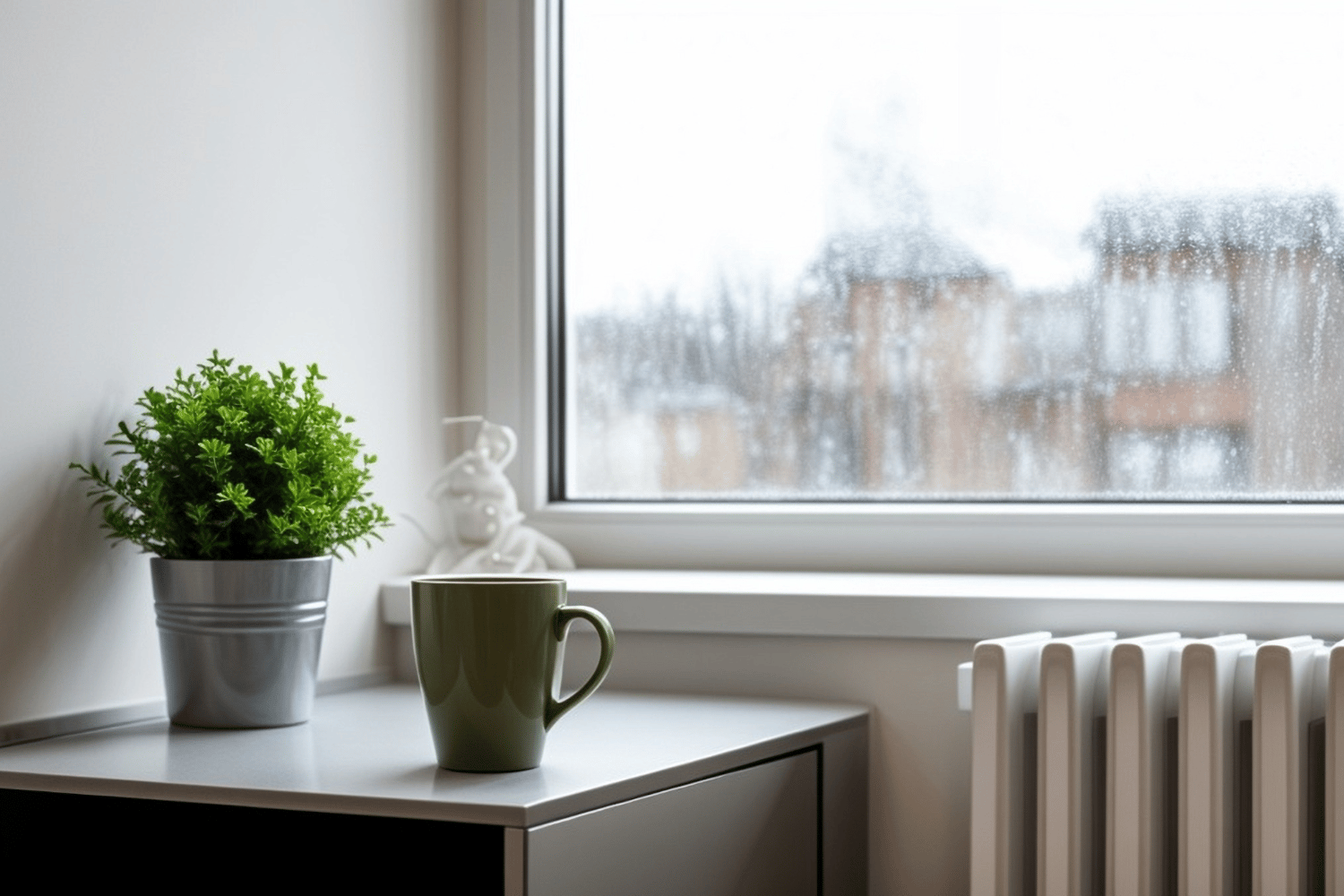
You wake up on a cold morning, head to the kitchen to make coffee, and notice your windows are dripping with moisture. Is something wrong? Did you just spend good money on new windows only to watch them "sweat"?
The short answer is: condensation can be normal, and in many cases, it's actually a sign your windows are doing their job well. That said, there are situations where moisture on or around your windows deserves a closer look.
At Renewal by Andersen, condensation is the number one question we get from homeowners, especially after a new installation. People wonder why after new windows are installed, they are noticing interior or exterior condensation. This article explains what condensation is, why it happens, when it's a problem, and what you can do about it.
What Does Window Condensation Mean?
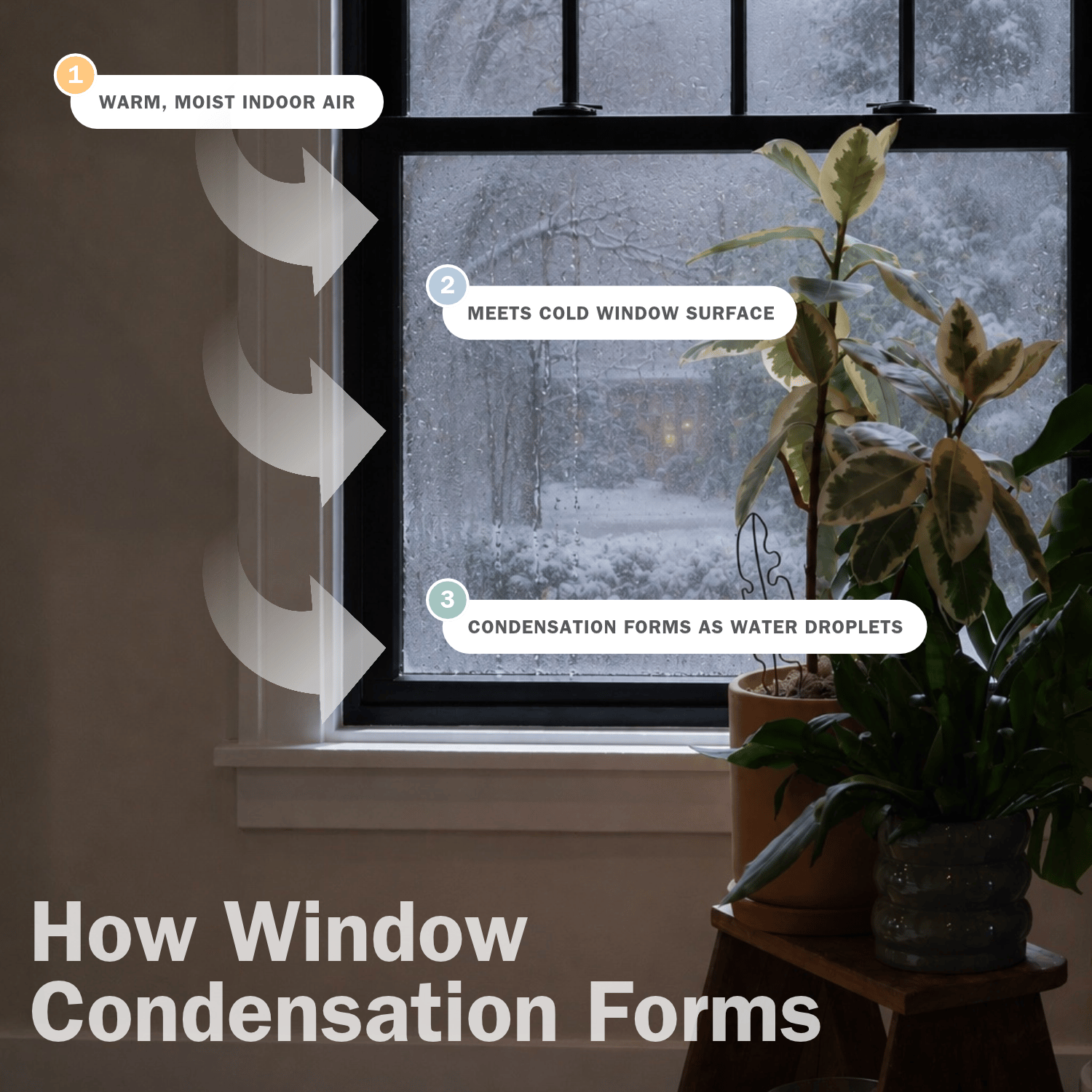
Condensation forms when warm, moist air comes into contact with a cooler surface. Your window glass, especially on a cold day, is often the coolest surface in the room. When the warm indoor air hits it, the moisture in that air turns into liquid. That's the "sweat" you're seeing.
Think about a cold glass of iced tea on a hot summer afternoon. The glass isn't leaking. It's just cold enough to pull moisture out of the surrounding air. Your windows work the same way.

Why Can New, Energy-Efficient Windows Show More Condensation?
This surprises a lot of homeowners, and it's worth explaining clearly. Older, drafty windows can allow air to leak in and out constantly. That constant air exchange keeps indoor humidity lower, which means less condensation. It also often can mean higher energy bills, uncomfortable drafts, and poor performance.
Newer, energy-efficient windows seal much more tightly. According to the U.S. Department of Energy, well-sealed windows reduce air leakage and improve thermal performance, which is exactly what you want. But that tighter seal also traps more moisture inside your home.
So if you're seeing condensation on your new windows that you didn't see on your old ones, that's not necessarily a defect. It's your home holding onto humidity it used to lose through air leaks. The windows are working. The humidity just has nowhere to go.
Interior Condensation
This is the most common type and is generally not a cause for concern. It means your indoor humidity is high enough that moisture is collecting on the coolest surface in the room. Some humidity is normal, but excessive humidity can lead to mold, mildew, and damage to walls and ceilings over time.
Is it a problem? Not necessarily. It doesn't mean something is wrong with your windows and can actually mean you have windows with good, tight seals.
How to reduce it: Manage your indoor humidity by venting common sources of household vapor, like cooking, showering, or running appliances — or increase air movement with fans to help minimize condensation.
Exterior Condensation
Exterior condensation is essentially dew. It happens when the outdoor air is warmer and more humid than the glass surface, typically on cool mornings in spring and fall. This can also be a sign your windows are well insulated, because the glass stays cooler than the outside air.
Is it a problem? No! It's just dew.
How to reduce it: You don't need to. It'll clear up on its own as the day warms.
Condensation Between Panes of Glass
This one is different, and a red flag. If you see fogging or moisture trapped between the layers of glass in a double- or triple-pane window and it doesn’t go away, that usually means the seal between the panes has failed. When that seal breaks, the insulating gas between the panes begins to escape and allows moisture to get in. This will eventually affect the window's thermal performance and typically won't resolve on its own.
Is it a problem? Unfortunately, yes. It may be a sign of larger issue with the glass unit.
How to reduce it: Learn more about window seal failure and what to do if you see it.
What Causes High Indoor Humidity?
Everyday living generates more moisture than most people realize. According to the Environmental Protection Agency (EPA), indoor humidity levels above 60% can create conditions favorable for mold growth. Here's where that moisture comes from:
- Cooking three meals a day adds roughly four to five pints of water vapor to the air.
- Each shower adds about a half-pint of moisture (more if you have teenagers in the house! If you know you know).
- Houseplants, aquariums, and even breathing can contribute to indoor humidity.
- Firewood stored indoors releases moisture as it dries.
Moisture also moves through walls, floors, and ceilings. So even if your kitchen and bathrooms are the main sources, you might notice condensation on windows in other rooms or even on other levels.
How Can You Reduce Window Condensation?
Reducing condensation is mostly about managing indoor humidity. Here are practical steps that can make a real difference:
- Run exhaust fans in the kitchen while cooking and in the bathroom while showering. Leave them running for 15 to 20 minutes after you're done.
- Open blinds and drapes to allow air to circulate near the glass.
- Use ceiling fans to improve airflow throughout the room.
- Turn down or turn off your humidifier if you're running one.
- Vent clothes dryers and gas appliances to the outside.
- Cover dirt floors in crawlspaces with a vapor barrier.
- Confirm that your attic and crawlspace are properly ventilated.
These steps won't eliminate condensation entirely, but they can help reduce it to a manageable level.

Ready to Learn More About Your Windows?
Condensation is one of those things that looks alarming but often has a simple explanation. If you're not sure whether what you're seeing is normal or something worth addressing, we're happy to help. Schedule a free consultation with Renewal by Andersen, and one of our experts will take a look at your windows, answer your questions, and give you the information you need to make a confident decision.

Homeowners Also Ask
What humidity level should I maintain in my home?
The EPA recommends keeping indoor relative humidity between 30% and 50% for comfort and to reduce the risk of mold growth – although that number can vary depending on outdoor temperatures and conditions. A basic hygrometer, available at most hardware stores, can help you monitor levels in your home. If you do notice interior condensation, wipe up the accumulated condensation promptly and avoid allowing water to remain on window components, trim, walls, or surrounding finishes.
Can condensation between window panes be fixed?
Condensation or fogging between panes typically means the insulating seal has failed. In most cases, the unit needs to be replaced. Whether that means replacing the glass alone or the full window depends on many factors – read more about window seal failure.
What if my doors have condensation?
The rules of condensation apply to any glass in your house – so it can absolutely affect glass panels in doors, transoms, and skylights, whether it's on the interior of the pane, exterior of the pane, or between panes.
Do I need to worry more about window condensation in coastal climates?
Condensation can be more common in coastal climates or anywhere humidity is higher in general. The same principles apply, but it can help to run an indoor dehumidifier if you're having trouble lowering your home's indoor humidity.
Does window material make a difference with condensation?
Some window materials have better insulation than others. For example, materials like composite and fiberglass have higher insulation values and typically result in a lower likelihood of condensation than aluminum — which has the worst energy efficiency of window materials unless it's thermally broken. Condensation will affect different materials differently; materials like composite and fiberglass are less prone to damage from condensation than, say, wood. These are things to consider when deciding on a replacement window material.
Our Hassle-Free Process

Step 1
Design Consultation
Step 2
Measure and Manufacture

Step 3
Installation
Step 4